Air conditioner running cost: what it costs per hour in the Hunter
Updated 8 October 2026 · 5 min read
Cost per hour = the unit's electrical power input in kW × your price per kWh. On the 2026-27 Ausgrid default price of 33.14 cents per kWh, a unit drawing 1 kW costs about 33 cents an hour. The trick is finding the right kW figure, which is not the size printed on the box.
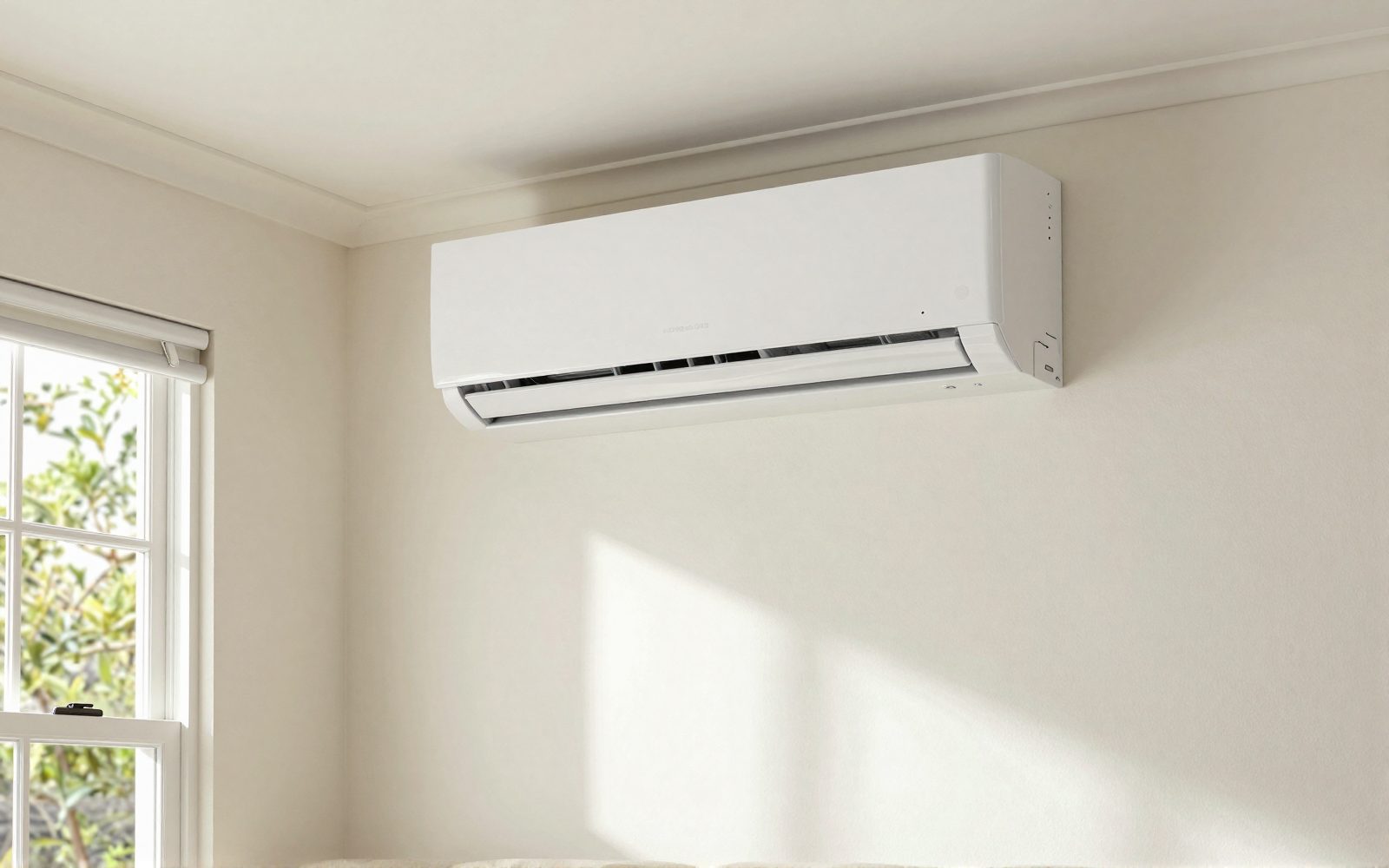
To work out what an air conditioner costs to run, multiply its electrical power input in kilowatts by the hours it runs and by your electricity price per kWh. In the Hunter, the Australian Energy Regulator's default market offer for 2026-27 caps the Ausgrid flat-rate usage price at 33.14 cents per kWh including GST. At that price, every kilowatt of power the unit draws costs about 33 cents an hour.
Find the right kW figure first
Most people multiply the wrong number. An air conditioner sold as "7.1 kW" is describing its capacity: how much heating or cooling it delivers. The electricity it uses is a different, smaller number, its power input, because a heat pump moves more heat than the electricity it consumes.
| Figure on the spec sheet | What it means | Use it for running cost? |
|---|---|---|
| Cooling or heating capacity, kW | Heat moved into or out of the room | No |
| Rated power input, kW | Electricity drawn at that rated output | Yes, as a rated-condition estimate |
| Annual energy consumption, kWh/year (on the energy label) | Electricity used in a standard year of use | Yes, for a yearly estimate |
The Energy Rating label separates capacity in kW from annual electricity use in kWh for the same reason. Find the rated power input in the product's specifications or installation manual; if you only have the label, use the annual kWh figure instead.
Cost per hour on the 2026-27 Ausgrid price
At 33.14 c/kWh, using the rated power input:
| Power input | Per hour | 4 hours | 8 hours (overnight) | 12 hours |
|---|---|---|---|---|
| 0.5 kW | 17c | 66c | $1.33 | $1.99 |
| 0.75 kW | 25c | 99c | $1.99 | $2.98 |
| 1.0 kW | 33c | $1.33 | $2.65 | $3.98 |
| 1.5 kW | 50c | $1.99 | $3.98 | $5.97 |
| 2.0 kW | 66c | $2.65 | $5.30 | $7.95 |
| 3.0 kW | 99c | $3.98 | $7.95 | $11.93 |
These figures assume the stated electrical draw stays constant. Rated input describes standard test conditions, not the maximum draw in every condition. An inverter changes its input as the load changes; actual use can be higher or lower. A hot afternoon, unshaded windows and open doors all affect the result.
A worked example: one summer of bedroom cooling
Assume a small bedroom split system with a rated cooling power input of 0.6 kW (an illustrative figure; check your own model), run 8 hours a night for 60 summer nights.
- Hours: 8 × 60 = 480 hours.
- Electricity at constant rated input: 480 × 0.6 kW = 288 kWh.
- Cost at 33.14 c/kWh: 288 × $0.3314 = about $95 for the summer.
If, once the room has cooled, the unit averages half its rated input, the same summer costs about $48. That is a second assumption, not a predicted range. Your measured average draw, insulation, shading and set temperature determine the actual result.
What changes the bill most
- The set temperature. The NSW Government suggests 23 to 26°C for cooling and 18 to 21°C for heating, and says each degree can change the bill by about 10 per cent. Fans, at about 2 cents an hour, can make a room feel about 3°C cooler first.
- Running only the rooms you use. A ducted system cooling empty rooms uses more than a split cooling one bedroom; our split system vs ducted guide compares the two.
- The right size. An undersized unit runs flat out for hours; see our air conditioner size calculator.
- Your tariff. The 33.14 c/kWh cap is for an Ausgrid residential flat-rate standing offer. Time-of-use prices differ: the AER lists 24.04 c/kWh outside the 3pm to 9pm peak and 60.20 c/kWh during that peak for the 2026-27 standing offer. Use the rates and times on your own bill, including any market offer.
- Humidity. On muggy Newcastle days, dry mode can make a room comfortable with less cooling.
Ducted systems cost more per hour
A ducted system is a bigger machine. A whole-home unit rated at 12 to 14 kW of cooling commonly draws somewhere around 3.5 to 5 kW of electricity at its rated output, so at 33.14 c/kWh it costs roughly $1.15 to $1.65 an hour while it runs flat out. Zoning changes that sum: closing the zones for empty rooms lets the unit run at a lower output. Check the rated power input on your own unit's specification sheet, then use the same sum as the table above.
Heating costs work the same way
A reverse cycle air conditioner heating a room is still a heat pump, so the method does not change: rated heating power input × hours × price. Heating inputs are often a little higher than cooling inputs on the same unit, and the outdoor unit works harder on a frosty Maitland or Cessnock morning than on a mild coastal one. Even so, a reverse cycle system usually delivers several kilowatts of heat for each kilowatt of electricity, which is why NSW energy advice ranks it among the cheapest ways to heat a room with electricity.
Running it on rooftop solar
If you have solar panels, air-con running in the middle of a sunny day is partly powered by your own panels. The electricity is not free: it is electricity you would otherwise export for the feed-in credit on your bill, which is usually a small fraction of the 33.14 c/kWh you pay to import. So pre-cooling the house in the early afternoon, before the 3pm to 9pm peak on a time-of-use tariff, can cut the evening cost noticeably. Our best temperature for air conditioner guide covers the settings that make pre-cooling work.
Your own figure, in three steps
- Find the rated power input (kW) in the specifications, or the annual kWh on the energy label.
- Find your usage price on your latest bill, in cents per kWh.
- Multiply: kW × hours × price. For the yearly figure from the label: annual kWh × price.
Common questions
How much does it cost to run an air conditioner for an hour?
Its power input in kW multiplied by your price. At the 2026-27 Ausgrid default price of 33.14 c/kWh, a unit drawing 1 kW costs about 33 cents an hour, and one drawing 2 kW about 66 cents.
Is it cheaper to leave the air conditioner on all day?
Usually not if the house will be empty for hours. Cooling an empty house still uses electricity; switching on before you get home, or using the timer, is generally the better compromise.
Why is my bill higher than the table?
You may be using a peak time-of-use rate, more than one unit or a different average power input. The daily supply charge also appears on your whole bill; it is not an extra usage cost caused by the air conditioner. Check your tariff and measured use.
Sources
- Australian Energy Regulator, Default market offer 2026-27 final determination (Ausgrid flat rate, inc. GST)
- Australian Energy Regulator, Current DMO residential tariff caps
- Australian Energy Regulator, Default market offer 2026-27 information kit
- Australian Government, Energy Rating, Understand the Zoned Energy Rating Label
- NSW Climate and Energy Action, Tips to cut your energy bill in summer and winter
Checked 8 October 2026. Prices are published ranges, not quotes; rebates change, so confirm with the installer and the NSW Government.