Air conditioning maintenance: what you can do, what a service covers
Updated 9 October 2026 · 13 min read
You can clean the filters, keep the outdoor unit clear and watch the drain. Anything involving refrigerant, gas pressure or wiring is licensed work. Have a professional service about once a year.
What you can do
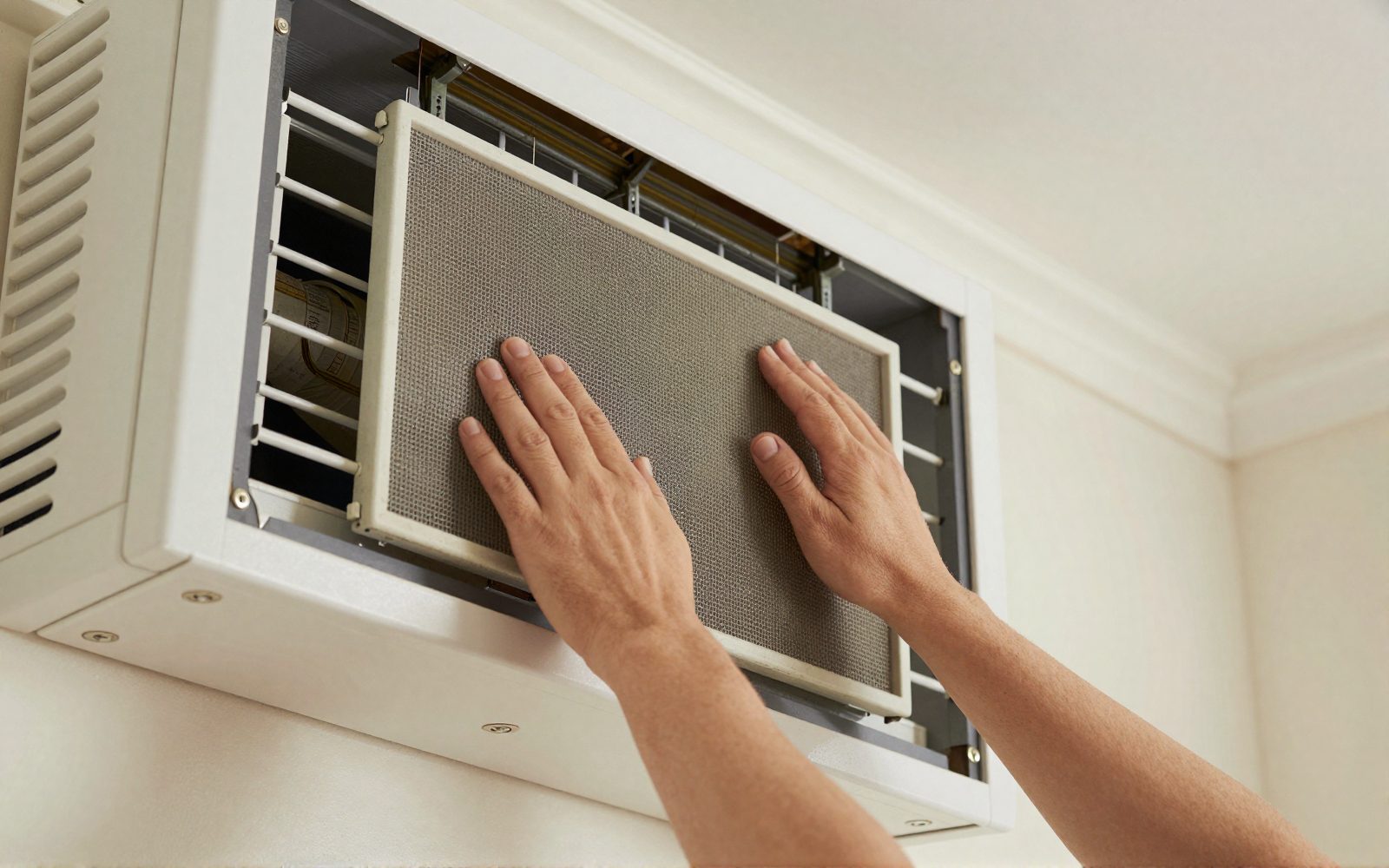
- Clean the filters regularly in heavy use: how to clean them.
- Keep the outdoor unit clear of leaves, plants and stored junk, with space around it for air.
- Watch the drain. Water should drip outside, not inside: a leaking unit.
- Use the right mode for the weather: decode your remote.
What a service covers
Typically a deep clean of the indoor coil and fan, the outdoor unit's coil, checks of the drain, electrical connections and refrigerant performance. Ask the technician to list what they will check.
What only a licensed technician may do
ARC requires a refrigerant handling licence for work on fluorocarbon refrigerant or equipment components that risks releasing it. That is different from cleaning a removable filter according to its manual. NSW requires the appropriate licence or certificate for air-conditioning work, including its associated electrical work. Refrigerant-circuit repairs and fixed wiring belong with a qualified technician: check the licences.
How often
hipages recommends a professional service at least once a year. A service costs about $75 to $200: service costs.
A maintenance calendar for a Newcastle home
| When | What to do |
|---|---|
| Every few weeks in summer and winter | Clean the indoor filters |
| Every month | Check the outdoor unit is clear of leaves and plants; check the drain drips outside on a humid day |
| Spring | Book a professional service before the summer rush; test cooling mode |
| Summer | Keep filters clean; use dry mode on muggy days; watch for leaks |
| Autumn | Test heating mode before the cold nights; clean filters after summer |
| Winter | Keep filters clean if you heat with the unit; clear the outdoor unit after storms |
| After a storm or a long power cut | Check the outdoor unit for debris; wait a few minutes before restarting |
The indoor unit
Filters are the most important job. A clogged filter cuts airflow, makes the unit work harder, raises power bills and can lead to ice on the coil and leaks. Clean them every few weeks when the unit is in daily use, more often if you have pets, live near a busy road or during bushfire smoke. Wipe the front panel and the louvres with a soft damp cloth, never spraying water into the unit. Leave the coil and the fan wheel to a professional: they are fragile, and household sprays can leave residues or damage the fins.
The outdoor unit
The outdoor unit needs space to breathe. Keep plants, hoses, bins and stored items at least a little way from all sides, as the installation manual specifies, and do not build an enclosure around it that traps hot air. Clear leaves from the top and the coil fins gently. Check the unit sits level and firmly on its pad or brackets. If ants, wasps or geckos have moved in, ask a technician to clear them, because insects can damage the electrical contacts.
Coastal homes
Homes close to the beaches, the harbour and Lake Macquarie face salt air, which corrodes metal coils and fittings faster than inland. If you live near the coast, ask about units with anti-corrosion coatings when you buy, check the outdoor unit for rust and white salt deposits, and follow the manufacturer's guidance on rinsing the outdoor coil; some recommend a gentle freshwater rinse, others leave it to a technician. A yearly service matters more on the coast.
Settings that save power
Each degree you set the thermostat closer to the outside temperature saves energy. The Australian Government's energy advice suggests around 25 to 27 degrees for cooling in summer and 18 to 20 degrees for heating in winter. Close doors and blinds in the room you are cooling, use the timer rather than leaving the unit running in an empty house, and clean the filters. Modern inverter units are most efficient when they run steadily at a set temperature, rather than being turned on and off repeatedly.
Dry mode in humid weather
Newcastle's summers are often more humid than hot. On a sticky day, dry mode (often a water-drop symbol) removes moisture from the air without cooling the room as hard, which can feel more comfortable and use less power than full cooling. Our guide to air conditioner symbols explains the modes.
Ducted systems
Ducted systems need the same care, in different places. Clean or replace the return-air filter behind the ceiling grille as the manual recommends. Keep the outdoor unit clear. Check that zones open and close as the controller says. Have a technician check the indoor unit in the roof space, its drain and overflow tray, and the ducts, which can split or come loose and leak cooled air into the roof.
Smells and mould
A musty smell when the unit starts is a sign of mould or bacteria on the coil, fan or drain pan, especially in humid weather or after a unit has sat unused. Clean the filters first. If the smell remains, book a professional clean of the coil and fan. Running the fan for a while after cooling, or using a self-clean or dry function if your unit has one, helps the coil dry out and slows regrowth.
Keeping records
Keep the manual, the installation certificate, invoices and service reports in one place. Note the date you cleaned the filters on a calendar or a phone reminder. A simple record helps a technician diagnose faults, supports a warranty claim and shows buyers the system was looked after if you sell the house.
When maintenance is not enough
If a well-maintained unit still struggles to cool or heat, is very loud, leaks repeatedly or keeps showing error codes, it may need repair, or it may be undersized for the room. Ask a technician to check the system's performance and size before buying a new unit. Our installation cost guide explains what a new split system costs in Newcastle.
Before summer: a checklist
- Clean the indoor filters and refit them dry.
- Clear the outdoor unit of leaves, cobwebs and anything stored against it.
- Check the condensate drain outlet outside is clear.
- Change the remote batteries if the display is faint.
- Run the unit on cool for half an hour and check it cools well, sounds normal and drips outside.
- Book a professional service if it has been more than a year, or if anything seemed wrong.
Before winter: a checklist
- Clean the filters again after the summer's use.
- Run the unit on heat and check it warms the room and the outdoor unit runs smoothly.
- Expect occasional defrost cycles on cold mornings, when the indoor fan pauses and the outdoor unit releases steam or water; this is normal.
- Check the outdoor unit after any storm for branches or debris.
Energy ratings and old units
Older air conditioners can use far more electricity than modern inverter units for the same comfort. If your unit is more than 10 to 15 years old, uses a lot of power, or needs a major repair, compare the cost of keeping it going with replacing it. The NSW Government's Energy Savings Scheme offers discounts on replacing old units with efficient reverse-cycle systems through participating installers; see our installation cost guide.
Pets, dust and smoke
Pet hair and outdoor dust clog filters faster, and smoke from bushfires or wood heaters leaves fine particles on filters and coils. In those conditions, clean the filters more often, and consider closing up and running the unit on recirculate during smoky days. Check the filters after any smoke event and clean them before they block.
Safety
Switch the unit off at the remote and the isolating switch before opening the front panel or cleaning. Never open the outdoor unit's covers, touch the electrical parts, or try to top up refrigerant: those jobs need licensed technicians. Keep children from climbing on outdoor units, and do not use the unit if you see sparks, smell burning or the isolating switch is damaged.
What a typical service visit looks like
A technician usually starts by asking how the system has been running, then checks the remote and the operating modes, removes and cleans the filters, cleans the indoor coil and fan wheel, flushes the drain, cleans and checks the outdoor unit, checks the electrical connections, and measures the temperature difference across the indoor coil to confirm the system is performing. The visit ends with a short report and any recommendations. A single split system service typically takes about an hour, longer for ducted and multi-split systems.
Maintenance for rental properties
In a rental, landlords are responsible for keeping an air conditioner they supply in working order, while tenants usually look after simple tasks such as cleaning filters if the lease says so. Agree who does what in writing, and keep service records. A regular professional service helps avoid breakdowns during heatwaves, when repair waits are longest.
How long air conditioners last
Many split systems give 10 to 15 years of service with regular maintenance, and ducted systems similar or longer, depending on the brand, the installation, how hard they work and how close they are to the coast. Good maintenance does not make a unit last forever, but it does help it reach the end of its natural life without costly breakdowns.
Common mistakes
- Leaving filters for months, then wondering why the unit struggles.
- Setting the thermostat very low in summer, which does not cool the room any faster.
- Running the unit with doors and windows open.
- Building a cover or cupboard around the outdoor unit that traps hot air.
- Ignoring water inside, a musty smell or a new noise until the unit fails on the hottest day.
Questions to ask at a service
- How clean were the coil, the fan and the drain, and how often should they be cleaned for my use?
- Are the refrigerant pressures and temperatures where they should be?
- Is there any corrosion or wear on the outdoor unit?
- Are the electrical connections and the isolating switch in good condition?
- Is the unit the right size for the room?
- How many more years would you expect from this unit?
DIY jobs and licensed jobs
| You can do | A licensed technician must do |
|---|---|
| Clean removable filters as the manual describes | Any work on the refrigerant circuit |
| Wipe the panel and louvres | Electrical work on fixed wiring |
| Keep the outdoor unit clear | Opening the outdoor unit's covers |
| Check the drain drips outside | Clearing drains inside walls or ceilings |
| Change remote batteries | Coil and fan deep cleans |
| Note error codes for the technician | Gas heating components in some ducted systems |
Cleaning the louvres and grilles
Dust collects on the moving louvres at the front of a split system and on ducted ceiling vents. Wipe them with a soft, slightly damp cloth with the unit off. Do not force the louvres by hand on units with motorised vanes; move them with the remote instead, so the motor is not damaged. Ducted ceiling vents can be vacuumed with a brush attachment, or unclipped and washed if the manufacturer allows.
When the unit has not been used for months
Before the first use after a long break, clean the filters, check the outdoor unit for nests and debris, and run the unit on fan mode for a while to dry and air the coil before switching to cooling or heating. If it smells strongly, makes new noises or shows an error, switch it off and book a service before relying on it in hot weather.
Air conditioners and solar
Many Newcastle homes now have rooftop solar. Running the air conditioner during the day, when the panels are producing, can use your own solar power instead of buying electricity at night. Pre-cooling the house in the afternoon on a hot day, then letting it coast into the evening peak, can cut running costs. Timers on the unit or a phone app make this easy.
Maintaining a ducted system in more detail
Return-air filter. The single most important job. A clogged return-air filter starves the whole system of air. Check it every month or two in heavy use, and clean or replace it as the manual says.
Ceiling vents. Dust builds up around supply vents and can mark the ceiling. Vacuum the vents and wipe the surrounding ceiling gently. If one room never gets enough air, check that its zone is open and its vent is not closed or blocked.
The controller. Keep the wall controller's software up to date if it is a smart model, check the clock and timers after a power cut, and replace batteries in any wireless zone sensors.
The roof space. Only a technician should work around the indoor unit in the roof, but you can note any water stains on the ceiling below it, any unusual noises or vibration, and any smell of burning or hot dust, and report them.
Ducts. Flexible ducts can sag, kink or tear over the years, especially after other trades have worked in the roof. A technician can inspect and repair them, which restores airflow to rooms that have gone weak.
Maintaining a multi-split system
A multi-split system has several indoor heads and one outdoor unit. Each indoor head needs its filters cleaned like a single split system, and the outdoor unit works harder because it serves several rooms, so keep it especially clear. When the outdoor unit fails, every room loses cooling, which is a reason to keep up the yearly service.
Remote controls and smart controls
Many newer air conditioners can be controlled from a phone app through a Wi-Fi adapter. Apps make it easy to switch the unit off when you leave, pre-cool before you arrive and see energy use. Keep the app and the adapter's firmware updated, use a strong password on the account, and remember that the app does not replace the filter cleaning and servicing the unit still needs.
Insurance and storms
After a storm, hail or flooding, check the outdoor unit for damage before restarting it. If water has reached the outdoor unit's electrics, or hail has flattened the coil fins, do not run it: book an inspection. Many home insurance policies cover storm damage to fixed air conditioners, so take photos before any clean-up.
How maintenance saves money
Maintenance pays for itself in three ways. First, a clean, well-tuned unit uses less electricity, because air flows freely over clean coils and the compressor reaches the set temperature sooner. Second, regular checks catch small faults, such as a loose connection, a blocked drain or a slow refrigerant leak, before they become expensive breakdowns. Third, a looked-after unit tends to last longer, which delays the cost of a replacement. Against that, a yearly professional service and a few minutes of filter cleaning every few weeks is a small cost.
Understanding error codes
When an air conditioner detects a fault, it often shows an error code on the indoor unit's display or flashes its lights in a pattern. Codes differ between brands and models, so look up yours in the manual or on the manufacturer's support site. Some codes point to simple issues, such as a filter reminder or a communication glitch after a power cut, which a restart can clear; switch the unit off at the isolating switch for a few minutes, then back on. If the code returns, note it down and give it to the technician, because it can save diagnosis time.
Noise as a warning sign
Listen to your unit. A new rattle can be a loose panel or debris in the outdoor fan; a squeal can be a fan bearing; clicking that repeats can be an electrical relay struggling; a hiss or gurgle can be refrigerant moving, which is sometimes normal and sometimes a sign of a leak. A sudden change in sound is worth a service call before the part fails.
A five-minute monthly check
Once a month in the seasons you use the system, take five minutes to look and listen. Open the front panel and look at the filters. Walk outside and check the outdoor unit is clear, the fan spins freely when running and nothing has been stored against it. On a humid day in cooling mode, look for drips from the drain outlet. Listen for new noises indoors and out. Check the remote display is bright. If anything looks or sounds different, deal with it now, in a mild month, rather than in the middle of a heatwave when technicians are booked out and the unit is working hardest. Small, regular checks like this are what keep an air conditioner reliable for its whole life, and they cost nothing but a few minutes.
The short version
Clean the filters every few weeks in heavy use, keep the outdoor unit clear, watch the drain, book a service each spring, and call a licensed technician for anything inside the unit.
Common questions
How often should an air conditioner be serviced?
At least once a year by a professional, with the filters cleaned between services.
Can I service my own air conditioner?
You can clean filters and keep the outdoor unit clear. Refrigerant, gas and electrical work need a licensed technician.
What temperature should I set my air conditioner?
Around 25 to 27 degrees for cooling and 18 to 20 for heating is the range the Australian Government's energy advice suggests.
Why does my air conditioner smell musty?
Usually mould or bacteria on the coil, fan or drain pan. Clean the filters first; if the smell stays, book a professional clean.
Do coastal homes need more air conditioner maintenance?
Yes. Salt air corrodes outdoor coils and fittings faster, so check for rust and book a yearly service.
Sources
- hipages, How much does air conditioning repair cost? (6 January 2026)
- Australian Refrigeration Council, Refrigerant handling licence
- NSW Government, Air conditioning and refrigeration work (licences)
Checked 9 October 2026. Prices are published ranges, not quotes; rebates change, so confirm with the installer and the NSW Government.