How to clean air conditioner filter: split and ducted systems
Updated 9 October 2026 · 10 min read
Follow your model's instructions: turn the unit off, remove its accessible mesh filters, vacuum or rinse them if washing is allowed, and let them dry fully before refitting. Allow for drying time as well as cleaning.
Split system, step by step
- Turn the unit off at the remote, and at the isolating switch if you can.
- Open the front panel. It usually lifts from the bottom edges.
- Slide out the filters by their tabs.
- Vacuum, then rinse with lukewarm water. Do not use hot water or harsh cleaners.
- Let washable filters dry fully in the shade, not in direct sun. Do not refit a wet filter.
- Slide them back and close the panel firmly.
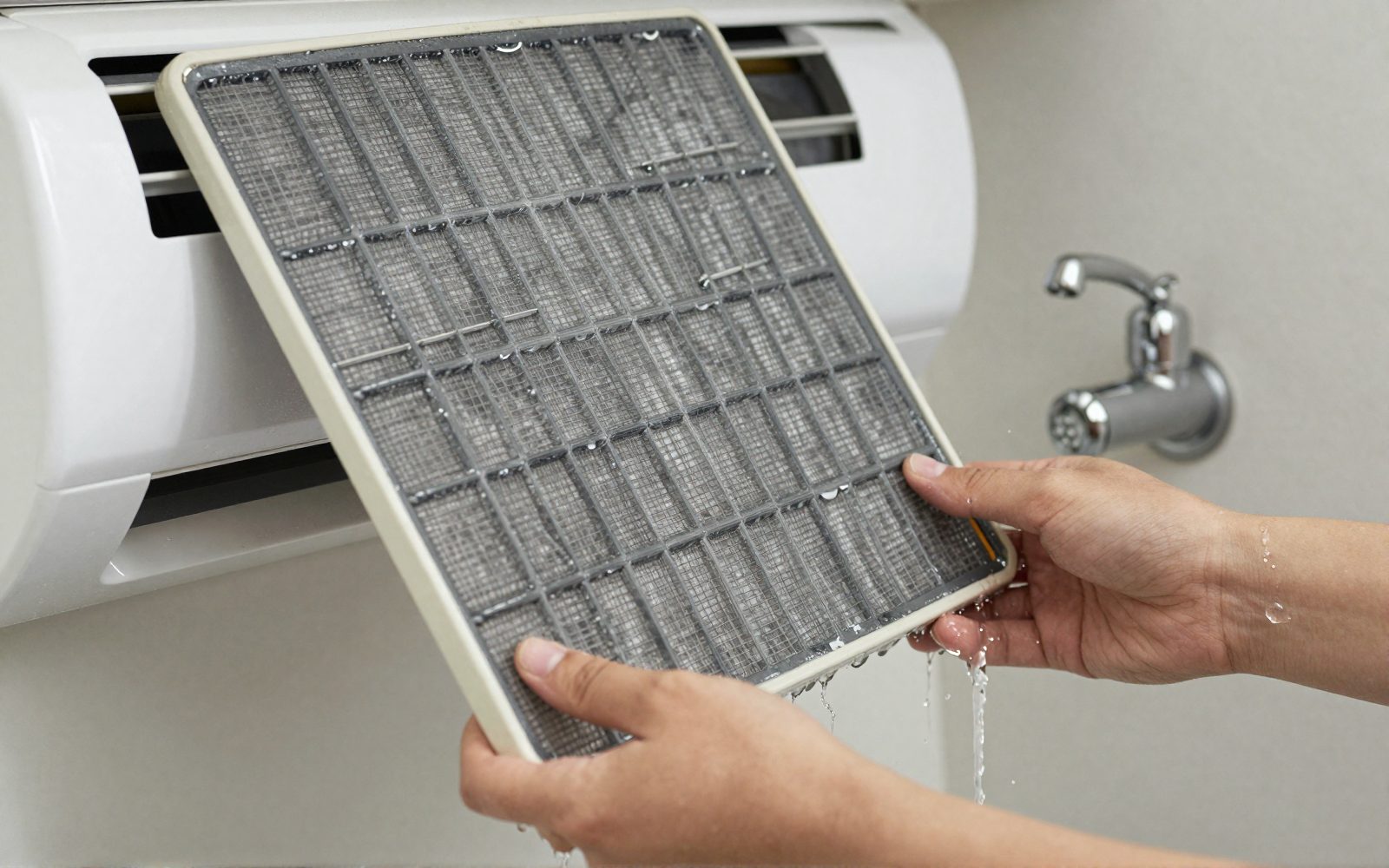
Check your model's operation manual: Daikin's manuals, for example, have a section on cleaning the air filters and any deodorising filter.
Ducted systems
Ducted systems have a return-air grille, usually in a hallway ceiling, with a filter behind it. Unclip the grille, take out the filter, vacuum or rinse it as the manual says, dry and refit.
A musty smell?
A dirty filter is the first suspect. If cleaning it does not fix the smell, the coil may need a professional clean: service costs.
How often to clean the filter
The right interval depends on how hard the unit works and how dusty your home is. As a rule of thumb, clean the filters every two to four weeks when the unit runs daily in summer or winter, and every couple of months in mild seasons when it barely runs. Clean them more often if you have pets that shed, if someone in the house has allergies, if you live near a busy road or a building site, or after bushfire smoke. Your model's manual gives the maker's own interval.
Signs the filter needs cleaning
- The room takes longer to cool or heat.
- Airflow from the unit feels weaker.
- You can see a grey layer of dust on the filter through the front panel.
- The unit smells dusty or musty when it starts.
- A filter or clean indicator light comes on, on models that have one.
- Water drips from the indoor unit, which can follow a coil icing over behind a clogged filter.
The filter light
Many split systems count running hours and light a filter sign as a reminder. The light does not know how dirty the filter is; it is only a timer. After cleaning, reset it as your manual describes, often by pressing a filter or reset button on the remote or the unit. If the light stays on after a reset, check the manual or ask a technician.
Kinds of filter
- Mesh air filters are the main filters in almost every split system. They catch dust and lint and are washable.
- Deodorising, photocatalytic or air-purifying filters sit in front of or beside the mesh filters on some models. Some can be refreshed, for example by placing them in sunlight, and others need replacing after a set time. Check the manual before washing them, because water can ruin some types.
- Ducted return-air filters sit behind a ceiling or wall grille. Some are washable mesh, others are disposable pleated media that you replace.
What not to do
- Do not put filters in the dishwasher or washing machine.
- Do not use hot water, bleach, solvents or strong detergents.
- Do not scrub hard with a stiff brush, which can tear the mesh.
- Do not dry filters in direct sun or with a heater, which can warp the plastic frame.
- Do not run the unit without its filters, which lets dust coat the coil.
- Do not spray water or cleaner into the unit itself.
Cleaning the rest of the indoor unit
While the panel is open, wipe the front panel, the louvres and the outside of the unit with a soft cloth dampened with water and a little mild detergent, then dry them. You may see the coil, a set of thin metal fins, behind the filters. Leave it alone: the fins bend easily, and coil cleaning needs care and the right products. A yearly professional service cleans the coil and the fan wheel properly.
Ducted filters in more detail
The return-air grille is usually the largest grille in the house, in a hallway or living room ceiling. With the system off, open or unclip the grille, supporting it so it does not swing down. Lift out the filter. Vacuum a washable filter gently, rinse it if the manual allows, and let it dry fully before refitting. Replace a disposable pleated filter with one of the same size and type; the size is often printed on its frame. A clogged ducted filter makes the whole system work harder, so check it at least as often as the manual suggests.
Why it matters
A clean filter keeps air flowing freely over the coil, which lets the unit cool or heat with less effort and less electricity. It also keeps dust from building up on the coil and the fan, where it is harder to remove and where mould can grow in humid weather. Cleaning the filter is the single most useful maintenance job an owner can do, and it takes about ten minutes.
When to call a technician
If cleaning the filters does not fix a smell, weak airflow, water dripping inside or ice on the coil, book a service. A technician will clean the coil and fan, flush the drain and check the refrigerant and electrics: what a service costs, and what to do if your unit is leaking.
Drying times
Washed mesh filters usually dry in the shade within an hour or two on a warm day, longer in winter or humid weather. Pat them gently with a towel first to speed things up, then stand them on edge so water drains off. Never refit a damp filter, because moisture in the unit encourages mould, and never run the unit without filters while they dry.
Cleaning multi-split and ceiling cassette units
Multi-split systems have one outdoor unit and several indoor units; each indoor unit has its own filters, cleaned the same way. Ceiling cassette units, common in larger rooms and offices, have filters behind a grille in the ceiling panel that hinges down. Turn the unit off, open the grille carefully, remove the filters and clean them as for a split system. Take care on a ladder, and ask for help with heavy grilles.
A note on health
Clean filters trap more dust, pollen and pet hair, which helps people with allergies and asthma. They cannot replace a dedicated air purifier, and they do not remove gases or fine smoke particles completely. If anyone in the household has breathing problems, keep up a regular filter routine and ask your technician about any higher-grade filters your model supports.
Keep a reminder
Set a phone reminder or write the date on a calendar each time you clean the filters. Many people forget for months between hot spells, and a two-minute check before the first hot day saves a sluggish unit and a higher power bill.
Cleaning a portable air conditioner filter
Portable air conditioners also have filters, usually on the back or side of the unit behind a grille. Unplug the unit, remove the filter, vacuum or rinse it as the manual describes, dry it fully and refit. Portable units also collect condensation in an internal tank or drain it through a hose; empty the tank regularly in humid weather and clean it to stop smells.
Cleaning a window or wall box unit
Older window and through-wall units have a filter behind the front grille. Many lift straight out. Clean them the same way as split system filters. These units often have no drain to the outside, so water may drip from the back of the unit outdoors, which is normal.
Tools you need
A soft brush attachment on the vacuum cleaner, a sink or tub with lukewarm water, a soft brush such as an old soft toothbrush for stubborn dust, a towel, and a clean place in the shade to dry the filters. For ducted return-air grilles, a sturdy step ladder, and a second person to hold the grille if it is heavy.
Questions from readers
Readers often ask whether they can spray disinfectant or coil cleaner into the unit after cleaning the filter. Do not spray anything into the indoor unit yourself; sprays can damage the coil coating, trip electrics and leave residues that smell when the unit runs. If the unit smells after the filters are clean, the coil and the fan wheel need a professional clean.
Another common question is whether a filter can be cleaned while the unit is running. It cannot: always turn the unit off first, so the fan does not draw dust from the open front into the coil and so you never reach near moving parts.
Step by step, in more detail
Switch it off. Turn the unit off with the remote and wait for the louvres to close. If the indoor unit has an isolating switch nearby, or the outdoor unit has one, switch it off too. This stops the fan and protects you from electrical parts.
Open the front panel. On most wall-mounted split systems, hold both lower corners of the front panel and lift it upwards until it stops in the open position. Some panels lift off completely. Do not force it: check the manual if it does not move easily.
Remove the filters. The mesh filters sit across the top of the coil. Push them up slightly, then pull them down and out by their tabs. Note how they sit so you can refit them the same way.
Vacuum first. Hold the filter with the dusty side up and vacuum it with a soft brush attachment. This lifts most of the dry dust before water turns it into mud.
Rinse gently. Rinse the filter from the clean side through to the dusty side with lukewarm water, which pushes dust out the way it came in. For greasy filters, such as in a unit near a kitchen, soak them briefly in lukewarm water with a little mild detergent, then rinse well.
Dry in the shade. Shake off the water, pat with a towel and stand the filters on edge in the shade until completely dry.
Refit and close. Slide the filters back into their guides, close the front panel until it clicks, switch the power back on and reset the filter light if your model has one.
How cleaning affects power use
A blocked filter forces the fan to work harder and reduces the amount of air passing over the coil, so the compressor runs longer to reach the set temperature. Keeping filters clean is one of the simplest ways to keep running costs down, alongside sensible thermostat settings.
If the filter is damaged
Filters wear out. If the mesh is torn, the frame is cracked or warped, or the filter no longer sits snugly, order a replacement from the manufacturer's parts supplier using the indoor unit's model number. A damaged filter lets dust straight through to the coil, which defeats its purpose. Replacement mesh filters are usually inexpensive, and deodorising or purifying filters have their own replacement intervals in the manual. Keep a spare set if your home is dusty, so you can swap them in while the washed ones dry.
How long the whole job takes
For a single wall-mounted split system, cleaning the filters takes about ten minutes of work plus drying time. A ducted return-air filter takes a little longer because of the ladder and the grille. If you have several units, clean them all on the same day and set one reminder for the next round, so the job becomes a simple habit rather than something remembered only when the air turns musty.
Renters
If you rent, cleaning the filters is usually a simple tenant task, while servicing and repairs are the landlord's job. Check your lease, and report leaks, smells or a unit that stops cooling to your property manager in writing so there is a record, especially before summer.
Common questions
How often should I clean my air conditioner filter?
Every few weeks in heavy use, or as your model's manual says.
Can I wash an air conditioner filter with water?
Most mesh filters can be rinsed with lukewarm water and dried in the shade; check your manual.
How do I reset the filter light on my air conditioner?
Usually with a filter or reset button on the remote or the unit after cleaning; check your manual for your model.
Can I put an air conditioner filter in the dishwasher?
No. Rinse it gently in lukewarm water and dry it in the shade, as most manuals describe.
How do I clean a ducted air conditioner filter?
Turn the system off, open the return-air grille, lift out the filter, vacuum or rinse it if washable, dry it fully and refit, or replace a disposable filter.
Sources
- Daikin Australia, Alira X split system operation manual
- hipages, How much does air conditioning repair cost? (6 January 2026)
Checked 9 October 2026. Prices are published ranges, not quotes; rebates change, so confirm with the installer and the NSW Government.