Newcastle humidity, heat and cold, month by month
Updated 3 October 2026 · 3 min read
Newcastle's afternoons are most humid in late summer (77 per cent in February at Nobbys) and driest in August (55 per cent). Summer days average 25 to 28°C; July nights fall to 8.5°C at Nobbys and 6.5°C at Williamtown.
Month by month
| Month | Nobbys max | Nobbys min | Williamtown max | Williamtown min | Afternoon humidity (Nobbys) |
|---|---|---|---|---|---|
| January | 25.6 | 19.3 | 28.3 | 18.2 | 74% |
| February | 25.4 | 19.4 | 27.7 | 18.2 | 77% |
| March | 24.8 | 18.4 | 26.4 | 16.5 | 73% |
| April | 22.8 | 15.4 | 23.8 | 13.3 | 68% |
| May | 20.1 | 12.0 | 20.4 | 10.1 | 66% |
| June | 17.5 | 9.8 | 17.7 | 8.0 | 64% |
| July | 16.8 | 8.5 | 17.2 | 6.5 | 59% |
| August | 18.1 | 9.3 | 18.8 | 7.0 | 55% |
| September | 20.3 | 11.6 | 21.6 | 9.2 | 59% |
| October | 22.2 | 14.1 | 23.9 | 12.1 | 65% |
| November | 23.6 | 16.2 | 25.7 | 14.5 | 71% |
| December | 24.9 | 18.1 | 27.5 | 16.7 | 72% |
Temperatures in °C: Bureau of Meteorology climate statistics, Newcastle Nobbys Signal Station and Williamtown RAAF, read 1 October 2026. Humidity: Bureau of Meteorology 1991 to 2020 normals for Nobbys, as tabled on Wikipedia.
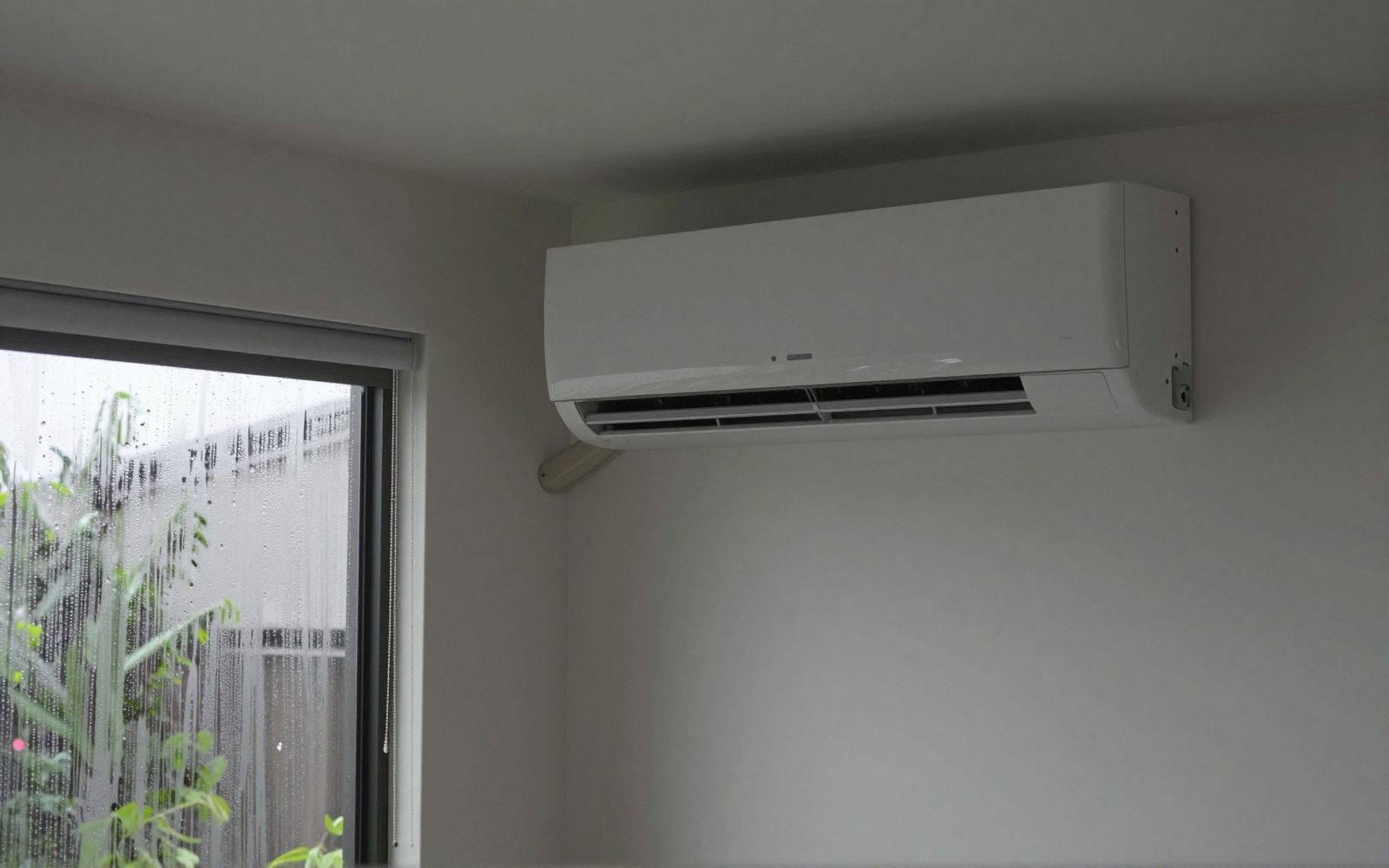
What it means for your air-con
- January to March: warm and humid. Cool mode on hot days, dry mode on sticky overcast ones.
- June to August: cool nights, colder away from the coast. Heat mode on a reverse-cycle split is the usual answer.
- Spring and autumn: often mild enough for the fan alone.
Why late summer feels worse than the numbers
January and February afternoons at Nobbys average around 25 to 26 degrees, which sounds mild, but afternoon humidity in the mid to high 70s per cent makes the air feel heavier than the thermometer says, because sweat evaporates slowly in humid air. That is why many Newcastle households run the air-con on days that are not especially hot. Dry mode, which removes moisture without cooling the room as hard, often gives more comfort for less power on these days.
Coast and inland
The table shows two stations a short distance apart behave differently. Williamtown, inland and near the RAAF base, has warmer summer days and colder winter nights than Nobbys on the coast, where the sea moderates both. Homes in the western suburbs and up the valley tend to follow the inland pattern, so they need stronger cooling in summer and more heating in winter than homes near the beaches.
Humidity indoors
High outdoor humidity finds its way inside, especially in older homes and in bathrooms and laundries without good exhaust fans. Indoors, high humidity encourages mould on ceilings, in wardrobes and behind furniture, and in the air conditioner itself. Running dry mode, using exhaust fans when showering and cooking, airing rooms on dry days and keeping air-con filters clean all help.
Choosing a system for this climate
A reverse-cycle air conditioner suits Newcastle's climate well, because the same unit cools in the humid summer and heats on cold winter nights. Look for a model with a good dry mode, and size it for the room using the sizing calculator as a starting point to discuss with an installer.
Heatwaves and westerly days
Some of Newcastle's hottest days arrive with hot, dry north-westerly winds, when humidity drops but temperatures climb well above the averages in the table. These days stress air conditioners the most. Clean the filters before summer, close blinds on west-facing windows in the afternoon, and start cooling early rather than waiting for the house to heat up.
Data sources
Temperatures come from the Bureau of Meteorology's climate statistics for Nobbys Signal Station and Williamtown RAAF, and humidity from the Bureau's 1991 to 2020 normals for Nobbys. Averages hide extremes: individual days can be much hotter, colder or more humid than the table shows.
Rain and storms
Summer is also Newcastle's stormy season, with heavy afternoon storms bringing short bursts of rain and higher humidity afterwards. Keep outdoor units clear of debris after storms, and check that drains still flow.
What this means for comfort
Comfort depends on both temperature and humidity, so a humid 26 degrees can feel hotter than a dry 30.
Common questions
Is Newcastle humid?
In late summer, yes: afternoon humidity at Nobbys averages 74 to 77 per cent from January to March, dropping to about 55 per cent in August.
How cold does Newcastle get?
July nights average 8.5°C at Nobbys and 6.5°C at Williamtown.
Sources
- Wikipedia, Newcastle, New South Wales (Nobbys climate table: Bureau of Meteorology 1991-2020 normals, humidity)
- Bureau of Meteorology, Climate statistics for Australian locations (Nobbys 061055 and Williamtown RAAF 061078, read 1 October 2026)
Checked 3 October 2026. Prices are published ranges, not quotes; rebates change, so confirm with the installer and the NSW Government.