Air conditioner size calculator: what kW does your room need?
Updated 9 October 2026 · 4 min read
Canstar Blue's rule of thumb is 0.12 to 0.15 kW of cooling per square metre, so a 30 m² room comes out at about 3.6 to 4.5 kW. CHOICE warns such guides often overestimate. This is a rough comparison, not a guaranteed upper limit or a substitute for a heat-load calculation.
Sizing calculator
What size air conditioner do I need?
-- kW
--
A rule of thumb, not a design: Canstar Blue's 0.12 to 0.15 kW per square metre of floor, scaled for ceiling height. CHOICE warns most guides overestimate; for an accurate figure use AIRAH's free load calculator or ask an installer for a heat-load calculation.
How to use the calculator
- Measure the room's length and width in metres at floor level. For an L-shaped room, measure it as two rectangles and add the answers.
- Measure the ceiling height. A standard Australian ceiling is about 2.4 m; many older Newcastle houses and Federation cottages have 2.7 to 3.3 m ceilings, which add volume to cool.
- Read the range. The calculator multiplies floor area by Canstar Blue's 0.12 to 0.15 kW per square metre and scales it for ceilings above or below 2.4 m.
- Adjust for the room. Use the lower end for a shaded, insulated room on the coast; lean towards the upper end only for the conditions in the list below.
Room size to kW at a glance
For a 2.4 m ceiling, the rule of thumb gives:
| Room area | Rule-of-thumb cooling capacity | Typical room |
|---|---|---|
| 10 m² | 1.2 to 1.5 kW | Small bedroom or study |
| 15 m² | 1.8 to 2.3 kW | Main bedroom |
| 20 m² | 2.4 to 3.0 kW | Large bedroom, small lounge |
| 30 m² | 3.6 to 4.5 kW | Lounge room |
| 40 m² | 4.8 to 6.0 kW | Open kitchen and living |
| 50 m² | 6.0 to 7.5 kW | Large open plan |
| 60 m² | 7.2 to 9.0 kW | Very large open plan |
Read it alongside CHOICE's warning below: the rule tends to land high, and a well-insulated, shaded room often needs less.
The sizes you can actually buy
Split systems come in steps rather than any number you like. Common sizes run from about 2 to 2.5 kW for small bedrooms, through 3.5 kW, 5 kW and 6 kW, to 7 to 9 kW for big open-plan spaces; the Daikin Alira X range in our sources, for example, runs from 2.0 to 7.1 kW. When the calculator lands between two steps, the shading, insulation and climate in the list below decide which way to round. Our 2.5kW air conditioner guide works backwards from each common size to the room it suits.
A worked example
Take a lounge room in a Hamilton cottage: 6 m by 5 m with a 2.7 m ceiling. The floor is 30 m², and the higher ceiling scales the rule by 2.7 ÷ 2.4, so the calculator gives about 4.1 to 5.1 kW.
Now the room. If it has ceiling insulation, a shaded verandah on the west and is used mostly in the evening, the lower end, or even the next step down, is reasonable, especially given CHOICE's view that guides oversize. If it has a big unshaded west window and a tin roof with little insulation, a 5 kW unit is the safer choice. The same room in Cessnock, with hotter summer afternoons, leans towards the upper end too.
Heating needs its own number
Every reverse cycle unit has two capacities: cooling and heating. The heating figure is usually a little higher than the cooling one on the same model, but in a cold inland winter it is the number that matters. If you mainly want the unit for winter warmth in the Upper Hunter or around Cessnock, compare heating capacities, and check the maker's figures for performance at low outdoor temperatures. Our reverse cycle air conditioner guide covers how to read both.
Ask for a heat load calculation
A good installer sizes from the room, not the rule. A heat load calculation adds up the windows and which way they face, insulation, ceiling height, the number of people and appliances, and the local design temperatures. CHOICE points to the AIRAH calculators at fairair.com.au for owners who want to do the sum themselves. If two quotes recommend very different sizes for the same room, ask each installer how they arrived at the number.
What the rule leaves out
The rule of thumb is a starting point. These push the size up:
- West-facing glass and large windows.
- Poor insulation or a dark roof.
- High or raked ceilings (the calculator scales for height).
- Open plans that join rooms.
- The local climate: inland Hunter towns such as Maitland and Cessnock have hotter summers than the coast.
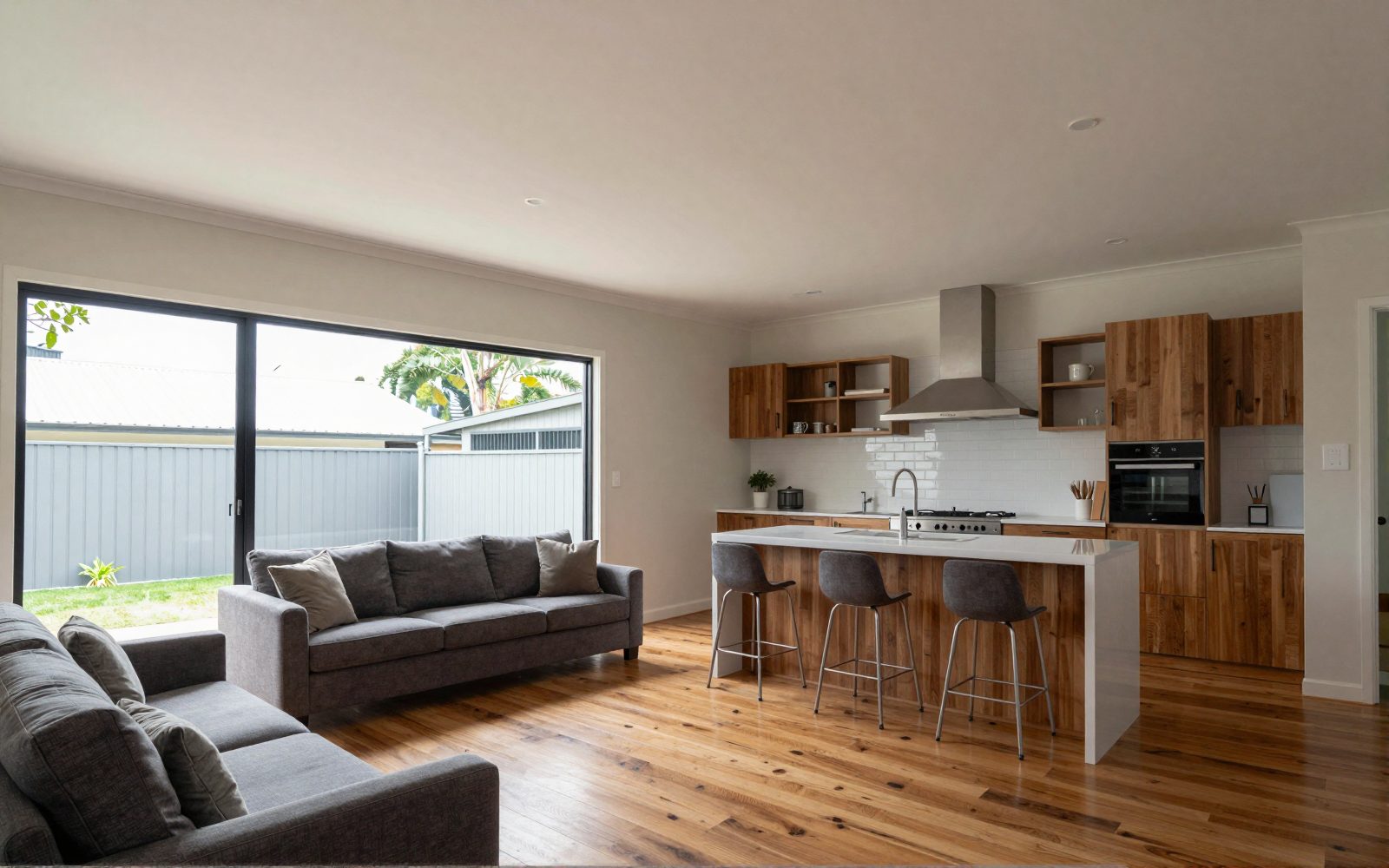
CHOICE's warning
CHOICE's air-conditioning expert says most commercial calculators recommend 3.5 to 5 kW for a 30 m² room, "which is often going to be a lot more capacity than you really need"; its own estimate for a 30 m² Sydney room with roof insulation is 2.3 kW. CHOICE suggests the AIRAH load calculators at fairair.com.au for a proper figure.
Too big or too small?
Too small runs flat out and struggles on the hottest days. Too big cycles on and off and removes less humidity, which matters in a muggy Newcastle summer: see dry mode.
Common questions
What size air conditioner do I need for a 30 m² room?
About 3.6 to 4.5 kW by Canstar Blue's rule of thumb; CHOICE estimates as little as 2.3 kW for a well-insulated 30 m² room in Sydney.
Is a bigger air conditioner better?
No. An oversized unit cycles on and off and removes less humidity. Size it to the room.
Sources
- Canstar Blue, What size air conditioner do I need?
- CHOICE, What size air conditioner do I need? (10 December 2025)
- CHOICE, What to know before buying an air conditioner (AIRAH calculators)
Checked 9 October 2026. Prices are published ranges, not quotes; rebates change, so confirm with the installer and the NSW Government.