Reverse cycle air conditioner: compare the system, label and quote
Updated 6 October 2026 · 13 min read
A reverse cycle air conditioner heats and cools. A split system describes separate indoor and outdoor units, so one appliance can be both. To choose between models, compare systems sized for the same rooms, then their energy labels and complete installed prices.
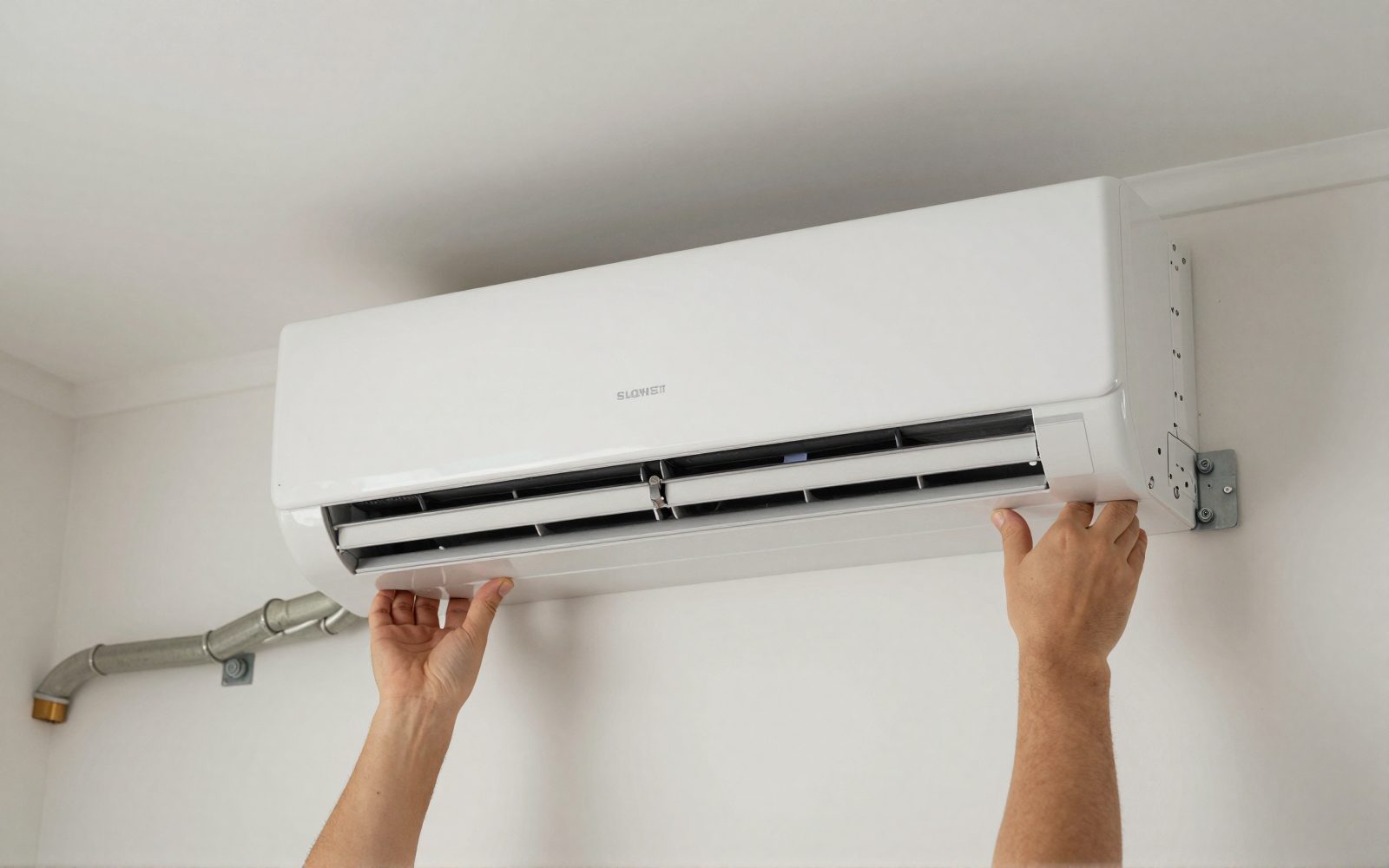
What is a reverse cycle air conditioner?
It is a heat pump that moves heat between outdoor and indoor air. It brings heat indoors in winter and moves it outdoors in summer. The Australian Government's Your Home guide explains the process and the difference between conditioning individual rooms and a whole home.
The words on the product listing describe different things:
| Term | What it tells you | What it does not tell you |
|---|---|---|
| Reverse cycle | It can heat and cool | Whether it serves one room or the whole house |
| Split system | An indoor unit and outdoor unit are separate | Whether that particular model heats as well as cools |
| Ducted | Air travels through ducts to outlets | Whether every room has its own control |
If a product says “split system”, check its heating specification. If it says “reverse cycle”, check how the air reaches the rooms. Those two checks resolve the apparent either/or choice. For the layout decision, see our split versus ducted guide.
The shapes a reverse cycle system comes in
| Type | Where it sits | Best for |
|---|---|---|
| High wall split | Indoor unit high on a wall | Bedrooms and living rooms; the most common and usually the cheapest to install |
| Floor console | A low unit at floor level | Heating, because warm air comes out where you sit; rooms with no suitable high wall |
| Ceiling cassette | Recessed into the ceiling, blowing four ways | Open-plan spaces and rooms where wall space is precious |
| Multi-split | Several indoor units on one outdoor unit | Two or three rooms with limited outside space |
| Ducted | A hidden unit in the roof feeding ceiling outlets | Whole homes, with zones; see our ducted air conditioning cost guide |
All of these can be reverse cycle. The choice is about where the air goes and how the rooms are used, not whether the system heats.
Is reverse cycle the cheapest way to heat a room?
For most homes with electricity only, usually yes. A plug-in electric heater turns each kilowatt-hour of electricity into one kilowatt-hour of heat. A reverse cycle air conditioner moves heat in from outside, so it delivers several kilowatt-hours of heat for each kilowatt-hour it uses. The NSW Government's air conditioner page makes the same point when it describes reverse cycle systems as an efficient way to both heat and cool.
A simple comparison at the 2026-27 Ausgrid default price of 33.14 c/kWh:
| Heater | Electricity drawn | Cost per hour |
|---|---|---|
| 2.4 kW plug-in fan or panel heater on high | 2.4 kW | About 80 cents |
| Reverse cycle split delivering a similar amount of heat | Often around 0.6 to 0.8 kW | About 20 to 27 cents |
The reverse cycle figure is illustrative, because power input varies by model and conditions; check the heating power input on the specification sheet of the model you are quoted. Our air conditioner running cost guide explains the sum.
Heating on cold Hunter mornings
A reverse cycle system draws heat from the outside air, so it works harder as the air gets colder. On the coast that rarely matters. Inland, frosty mornings in Maitland, Cessnock and the Upper Hunter bring two effects:
- Lower output. Heating capacity falls as the outdoor temperature drops, so a unit sized only on its rated heating figure can feel weak at 7am in July.
- Defrost pauses. The outdoor coil ices up, and the unit stops heating for a few minutes to melt it, often with a cloud of steam outside. That is normal.
If winter heating is the main job, ask the installer for the model's heating capacity at low outdoor temperatures, which many makers publish, and consider the next size up for a cold inland living room. Our size calculator covers room sizing.
Getting the most heat for your money
- Choose Heat, not Auto, in winter, so the unit does not switch to cooling in the afternoon.
- Set 18 to 21°C, the range the NSW Government recommends for heating; each degree lower saves roughly 10 per cent by its rule of thumb.
- Point the louvres down. Warm air rises; aiming it at the floor spreads the heat where you are.
- Close doors to rooms you are not heating, and block draughts at the base of doors.
- Start before the house gets cold. Holding a room at 20°C is easier than lifting it from 12°C.
- Clean the filters at the start of winter; a clogged filter cuts heating output.
Our best temperature for air conditioner guide has the full list of settings by situation.
Reverse cycle or gas heating?
If you already have gas, the comparison depends on your gas price, the supply charge and how much heating you use. Reverse cycle wins on flexibility, because one system both heats and cools and it can run on rooftop solar. Gas heaters can deliver a lot of heat quickly and do not slow down in frosty weather. For a house replacing an old gas heater and also wanting summer cooling, reverse cycle covers both jobs with one appliance; and if hot water is the only other gas use, a heat pump hot water system can let you close the gas account altogether.
Reverse cycle or a portable air conditioner?
Portable air conditioners are sold as a cheaper, no-installation alternative, and some can heat as well. They are a different class of product. The whole refrigeration system sits inside the room, so the compressor noise is in the room with you, and a hose has to vent hot air out of a window. Some of the room's air is pushed outside in the process and replaced by warm air leaking in, which works against the cooling. A portable unit can make sense in a rental where you cannot mount a split system, or for occasional use in a small room. For a room you use every day, a reverse cycle split system is usually quieter, more effective and cheaper to run.
A typical Newcastle house, room by room
To show how the brief turns into a plan, here is an illustrative three-bedroom brick home in Lambton with a tiled roof and ceiling insulation:
| Room | Size | Use | A reasonable approach |
|---|---|---|---|
| Open living and kitchen | 6 x 7 m, west windows | Afternoons and evenings | One 7 kW wall split or a floor console for winter heat |
| Main bedroom | 4 x 4.5 m | Overnight | One 2.5 kW split if shaded, 3.5 kW if the window faces west |
| Two smaller bedrooms | 3.5 x 3.5 m each | Overnight, children | Two 2.5 kW splits, or a multi-split with one outdoor unit |
| Hallway and bathroom | Small | Passing through | No unit; doors open to adjacent rooms |
The alternative for the same house is a zoned ducted system. The split plan lets the family start with the living area and add bedrooms later; the ducted plan gives one hidden system and one controller. Both are reverse cycle. Our ducted air conditioning cost guide compares the costs, and our 2.5kW air conditioner guide covers the small bedroom size.
Start with the rooms you use
Before comparing prices, give every installer the same brief. A quote for one living room cannot answer the same question as a quote for a living room and three closed bedrooms.
Use this room-by-room note:
| What to record | What to put in the brief |
|---|---|
| Rooms and doors | Rooms that need heating or cooling; doors usually open or closed |
| Dimensions | Length, width and ceiling height of each room |
| Exposure | Large windows, their direction and afternoon sun |
| Building | Known roof and wall insulation; obvious draughts |
| Use | Daytime living, evening use, overnight bedrooms or occasional guests |
| Installation | Possible outdoor location, existing unit and access restrictions |
Ask the installer to explain the sizing calculation and assumptions. The Victorian Government's selection guide identifies room size, insulation and windows as relevant to capacity. A calculator is a starting point, not a site assessment. Our sizing calculator helps prepare that conversation.
If your rooms are uncomfortable because of draughts or unshaded windows, include those conditions in the brief. Your Home also explains how insulation, shading and zoning affect the heating and cooling job. Do not expect an appliance comparison alone to resolve them.
How to read a reverse cycle air conditioner label
The Zoned Energy Rating Label guide distinguishes capacity in kW from annual electricity use in kWh. Capacity is heating or cooling output. It is not the electrical draw you should multiply by your tariff.
For each shortlisted model, record:
- Exact indoor and outdoor model numbers.
- Heating and cooling capacities separately.
- Heating and cooling stars for the same climate zone.
- Annual heating and cooling energy use for that zone.
- Indoor and outdoor noise figures.
Use the government calculator linked from the guide to identify your postcode's zone. Compare similar capacities and features before comparing stars. A larger appliance can have the same stars as a smaller one while using more electricity. The annual label figures are standardised estimates, not forecasts of your bill.
Some models are exempt from displaying a label, including certain ducted systems. Ask for the model's performance information; an absent label does not mean zero efficiency. Energy Rating lists the exemptions.
A worked running-cost comparison
Here is an original example with invented figures, showing the arithmetic rather than recommending a brand. Assume both models have suitable, comparable capacities for the same rooms and that the numbers are from the same climate zone.
| Comparison item | Example A | Example B |
|---|---|---|
| Annual cooling electricity | 500 kWh | 400 kWh |
| Annual heating electricity | 1,100 kWh | 900 kWh |
| Total annual electricity | 1,600 kWh | 1,300 kWh |
| Assumed usage tariff | $0.35/kWh | $0.35/kWh |
| Illustrative annual energy cost | $560 | $455 |
| Complete installed price | $2,000 | $2,450 |
The calculation is (cooling kWh + heating kWh) × usage tariff. For A, that is (500 + 1,100) × $0.35 = $560. For B, it is (400 + 900) × $0.35 = $455.
B costs $450 more upfront and uses $105 less electricity per illustrative year. Simple payback is $450 ÷ $105 = 4.29 years, about four years and three months. With those assumptions, five years of installation plus electricity would total $4,800 for A and $4,725 for B: a $75 difference.
That small difference is a reason to inspect the assumptions. If the annual energy difference were only 150 kWh, the saving at the same tariff would be $52.50 and simple payback about 8.6 years. At 600 kWh difference, it would be $210 and about 2.1 years. Those are sensitivity examples, not measured performance.
Substitute your own label figures and usage tariff. Keep heating and cooling separate if you rarely use one mode. A flat-rate example does not model time-of-use tariffs, solar self-consumption or exports. It also excludes finance, maintenance, repairs, changing tariffs and differences in service life. Your actual hours, weather and settings can differ from label assumptions. The standing daily supply charge is not an extra air-conditioning usage charge.
Compare complete installation quotes
An advertised appliance price and a complete installed price are different figures. Send your room brief to two or three installers and ask them to return the same information:
| Quote item | Question to settle before accepting |
|---|---|
| System | Are both indoor and outdoor model numbers specified? |
| Design | Which rooms and conditions does the quoted capacity cover? |
| Locations | Where will the indoor unit, outdoor unit and condensate drain go? |
| Pipework | What pipe length is included, and what changes the price? |
| Electrical work | Is the required work included, and who arranges it? |
| Access | Are difficult access, roof work or lifting costs included? |
| Replacement | Is removal and disposal of the old unit included? |
| Handover | What warranty documents and operating instructions will you receive? |
| Total | Is GST included, and are provisional allowances clearly identified? |
If one quote excludes an item, get a price for it before using the example above. A $200 appliance saving is not a saving if the missing installation work costs more. Our split-system installation cost guide goes further into quote scope.
Check the NSW incentive before committing
The NSW Government's air-conditioner upgrade page explains its current incentive pathway. Check eligibility and provider requirements before ordering. Ask the provider to identify the eligible model, any required customer contribution and whether the quote already includes the incentive. Do not subtract an assumed rebate a second time.
Common mistakes when buying
- Comparing capacity without the room. A 7 kW quote and a 3.5 kW quote are not competing offers for the same job.
- Looking only at cooling. In a cold inland home, the heating capacity and the low-temperature performance matter more.
- Comparing stars across different climate zones on the label. Use the same zone for every model.
- Ignoring where the outdoor unit goes. Noise rules and boundary clearances apply; see our air conditioner outdoor unit guide.
- Taking an install without licence checks. Refrigerant work needs an ARCtick licence and the wiring a licensed electrician.
- Counting the rebate twice. Check whether the quoted price already includes the NSW discount.
Noise: the figure to compare
Every reverse cycle model lists sound levels for the indoor unit at each fan speed and for the outdoor unit, in dB(A). For a bedroom, the indoor unit's lowest fan figure matters most, because that is what you hear at night. For the outdoor unit, think about the neighbours: in NSW, an air conditioner must not be heard inside a neighbour's bedroom or living room after 11pm or before 7am on weekdays, and before 8am on weekends and public holidays. When two models are otherwise close, the quieter one is often worth a little more.
Controls that make a difference
Simple controls save more money than clever ones that nobody uses. Look for a clear remote or wall controller, a timer you can set without the manual, and a sleep or night setting for bedrooms. Wi-Fi control through a phone app is useful if you want to switch on before you get home, or check whether you left it running; it is worth less if you are always home. For ducted systems, a controller with zone buttons and, ideally, a temperature sensor in each zone gives better comfort than one central thermostat.
Warranty and service
Warranty terms differ between brands and between the unit and the installation. Ask how long the parts and compressor are covered, whether the warranty requires a service at set intervals, who does warranty work in the Hunter, and how long parts take to arrive. A brand with a local service network may get a broken unit running again in days rather than weeks in the middle of summer, which matters more than a slightly better star rating.
A short checklist before you sign
- The same room brief went to every installer.
- Heating and cooling capacities both suit the rooms, including cold mornings if you are inland.
- Label figures are compared for the same climate zone.
- Both model numbers, the full scope and the total price are on each quote.
- The installer's refrigerant and electrical licences are checked.
- Any NSW discount is shown once, on the quote.
- You know who to call for service and warranty.
Servicing a reverse cycle system
A reverse cycle system works in both seasons, so it gets more hours than a cooling-only unit. Clean the filters every few weeks in heavy use, and at the change of seasons. Book a professional service before summer or winter, whichever you rely on more; in the inland Hunter that is often winter. A service should check the refrigerant performance in both heating and cooling, the drain, the coil and the electrical connections. Our air conditioning maintenance guide explains what to expect and how often.
How long the decision lasts
A reverse cycle system is a long-term purchase: you will live with its noise, running cost and comfort for many summers and winters. That is the reason to spend an extra hour on the room brief, the label comparison and the quote checklist above. The cheapest quote on the day is often not the cheapest system over the years you own it, and the most expensive is not automatically the best. A well-sized, efficient model from a brand with good local service, installed by licensed people who explained their sizing, is the combination to aim for.
What should you choose?
Choose from models suited to the room brief, with the heating performance you need. Compare efficiency and installed cost on the same basis, then consider noise, controls, warranty conditions and servicing. This guide does not test brands or establish a universally best model.
Keep the final quote and both model numbers. At handover, ask the installer to show you heating mode, cooling mode, timers and filter access. Use our maintenance checklist once the system is installed.
Sources
- Australian Government, Your Home, Heating and cooling
- Australian Government, Energy Rating, Understand the Zoned Energy Rating Label
- Australian Government, Energy Rating, Heating and cooling
- NSW Government, Air conditioner upgrades
Checked 6 October 2026. Prices are published ranges, not quotes; rebates change, so confirm with the installer and the NSW Government.